Japandi vs Scandinavian: What's the Difference?
Japandi vs Scandinavian is often a choice between two versions of a calm, practical room. Both can use natural materials, comfortable furniture and restrained decoration. The useful difference is how you want to balance lightness, contrast, texture and empty space, especially alongside furniture you already own.
You do not need to replace everything to explore either direction. Upload a clear photo below and compare concepts of your own room. Results vary by photo and can change details; they are not measured plans or a substitute for contractors or a licensed designer. Keep your existing architecture as the reference while reviewing each image.
By FreeAIRoomDesign · Published and updated 2026-10-21
Your room. A new perspective.
1 free image / dayJapandi vs Scandinavian: look at the whole composition
In decorating terms, Japandi brings together Japanese-influenced restraint and Scandinavian practicality. It often favors grounded shapes, warm wood, earthy neutrals and a few objects with visible texture. Scandinavian rooms commonly emphasize a lighter visual weight, everyday comfort and pale surfaces that work with available daylight. Neither description is a rigid rule or a claim about every home in those places.
Look at relationships rather than isolated accessories. A pale sofa with a black lamp could fit either direction. Ask whether the room feels low and grounded or light and open, how much contrast it contains, and how many objects compete for attention. Those choices affect the result more than buying a particular vase.
Choose a palette that works with your fixed finishes
For a Japandi direction, test warm off-white beside clay, brown or soft charcoal. Let wood grain and woven surfaces provide variation instead of adding many accent colors. For a Scandinavian direction, compare a lighter neutral base with pale wood and a restrained blue, green or muted pink. These are starting points, not mandatory color charts.
Put samples next to your floor, trim and largest furniture piece. A cool white wall can look disconnected beside strongly orange flooring; a warm neutral may bridge them. Check daylight and evening lighting before deciding. In a rental, compare bedding, curtains and rugs rather than assuming you can repaint the room to match an inspiration image.
Compare furniture height, weight and comfort
Japandi concepts often use low profiles, substantial wood and simple forms with breathing room around them. Scandinavian concepts may show slimmer legs, lighter frames and softer upholstery. Both need to support how you live. A low lounge chair is not a good choice if getting up from it is uncomfortable for you.
Measure seat height, depth and the furniture’s full footprint. Check whether a low bed makes under-bed storage harder to access or whether a delicate-looking chair is comfortable for longer reading. Keep a sound existing piece if it fits. You can adjust its surroundings with a quieter rug or warmer lighting rather than replacing it to meet a style label.
Use texture without making every surface a display
For Japandi, try a limited mix such as linen, wood and matte ceramic. A handmade-looking bowl can be a focal point when the adjacent surface stays useful. Scandinavian rooms can use wool, woven fabrics and wood to soften light walls. Texture makes either direction feel less flat without needing lots of small accessories.
Consider upkeep before choosing materials. A deeply textured rug may be harder to clean in your household than a flatter weave. Unfinished-looking surfaces are not necessarily suitable for spills. Ask about actual finishes and care instructions. A generated stone tabletop or delicate paper shade is a visual suggestion; it does not tell you durability, cleanability or product availability.
Let the room’s light guide the comparison
Take your starting photo in ordinary daylight with the main walls visible. Very dark images and extreme wide angles make it harder to judge proportions. Compare the same viewpoint in both styles, looking for how lamps, curtains and larger surfaces relate. Keep the original window positions in mind if the AI invents extra light or widens an opening.
The sample comparisons below come from different AI-generated bedrooms. They illustrate each style but are not a controlled same-room test of Japandi against Scandinavian. Use your own photo for that comparison. The same-room strips on our style pages show other available directions from a shared source when matching examples exist.
Blend the parts that fit your everyday life
If you own pale oak furniture and want a Japandi feel, begin with quieter surfaces and one grounded dark accent. If you like Scandinavian brightness but already have a dark bed, use lighter bedding and a soft rug to balance it. Avoid changing several major pieces before you know whether the direction feels comfortable.
Write three preferences instead of choosing an identity: warm neutral walls, comfortable upholstered seating and visible wood, for example. Then test one textile or lamp. Keep storage and clear walking paths in the plan. A successful room can borrow from both directions while making sense for your measurements, budget and habits; it does not need to be a perfect illustration of a category.
Your next step
Before you buy
- Measure the furniture footprint, door openings and delivery route.
- Compare material samples in daylight and under your evening lights.
- Check the full price, care instructions and return terms.
AI-generated sample concepts
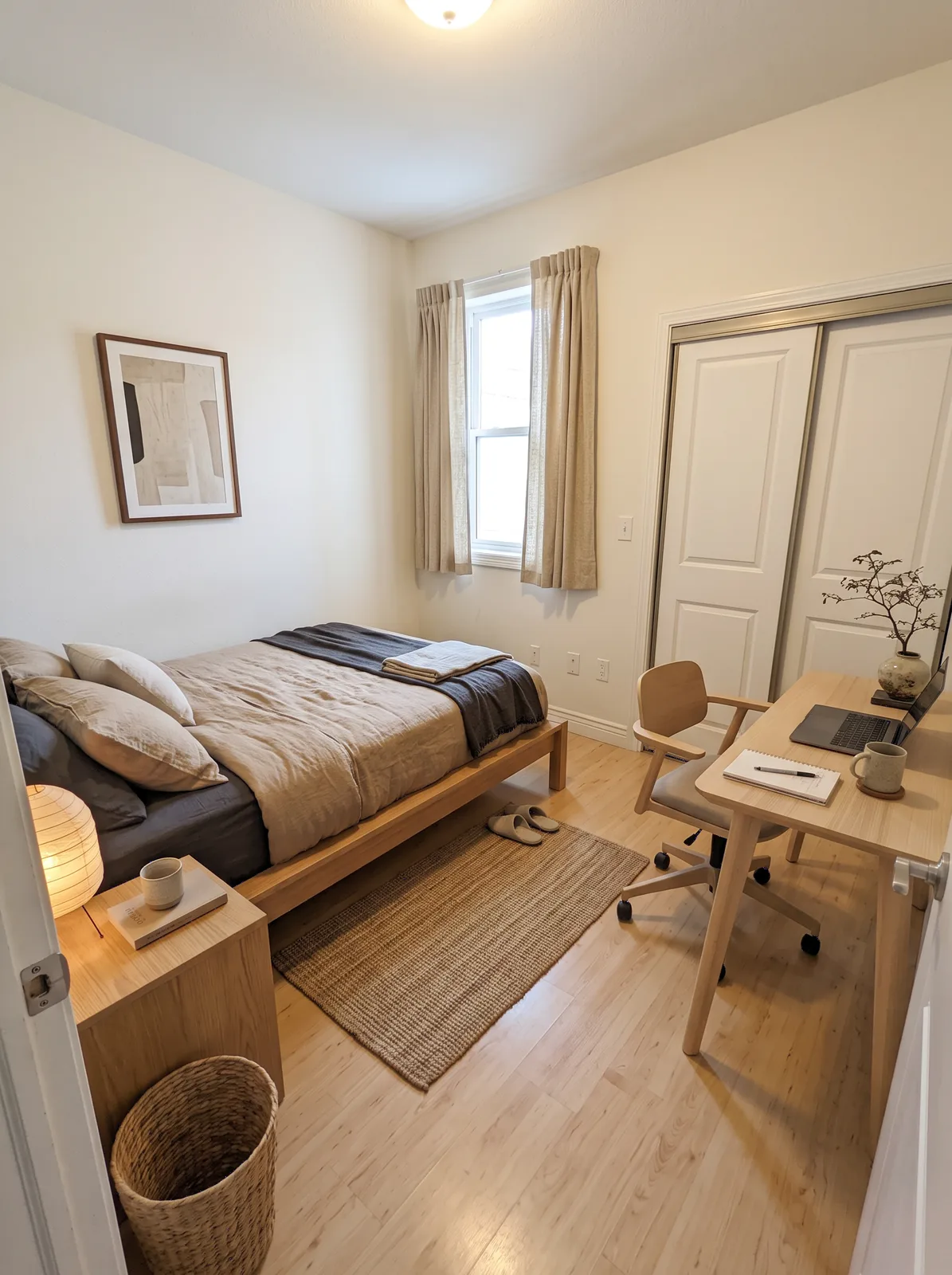
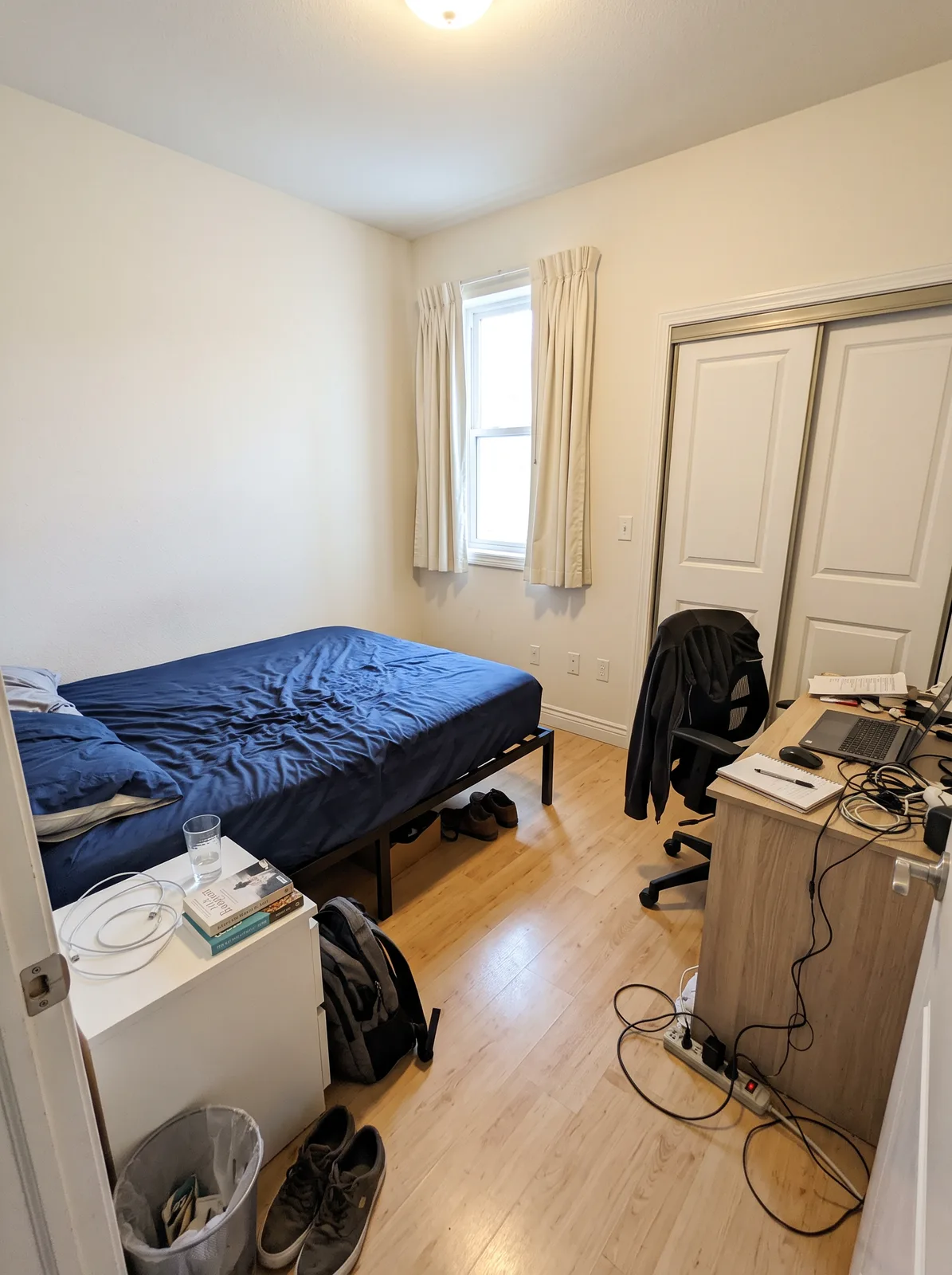 BeforeAfter
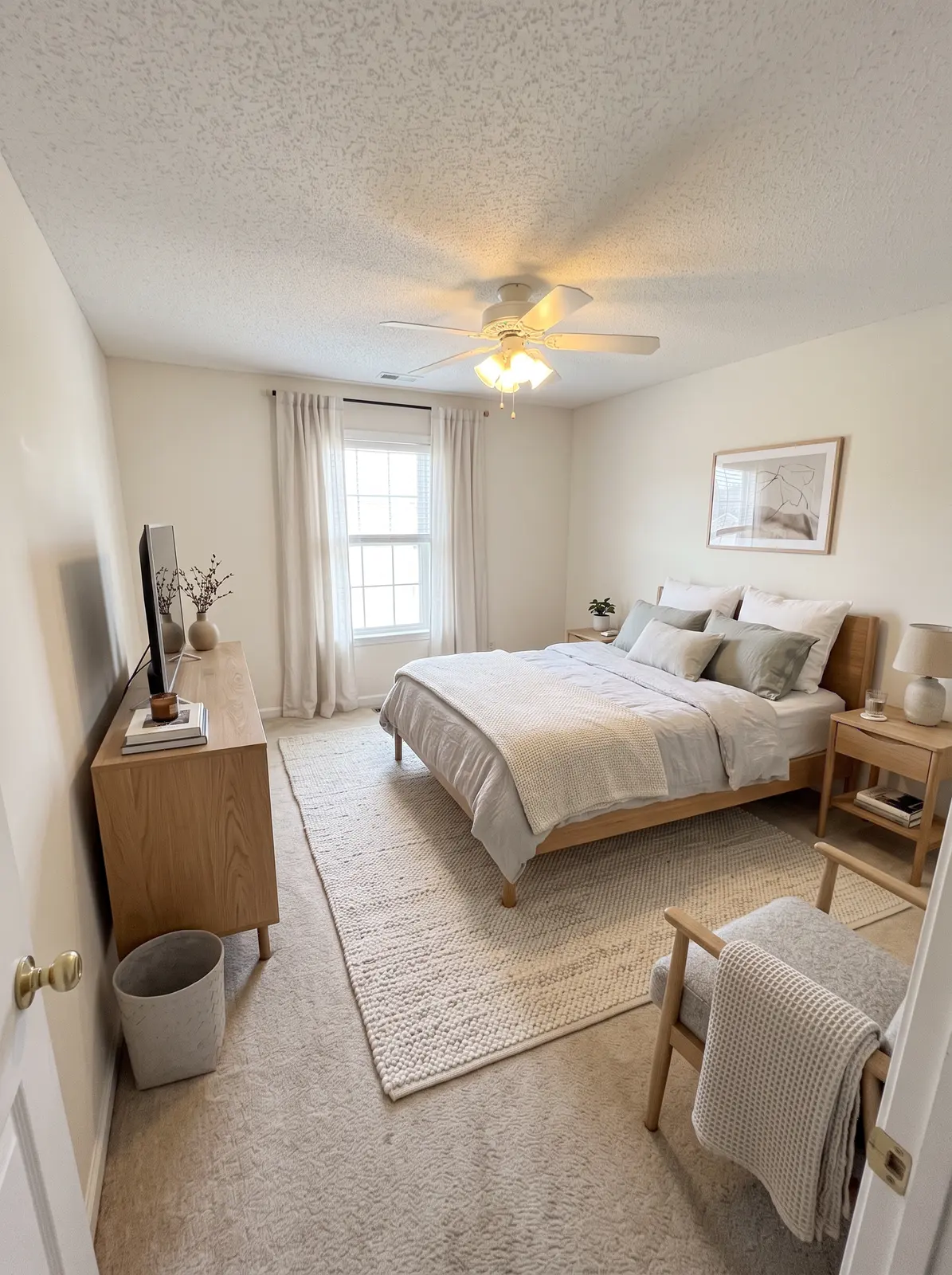
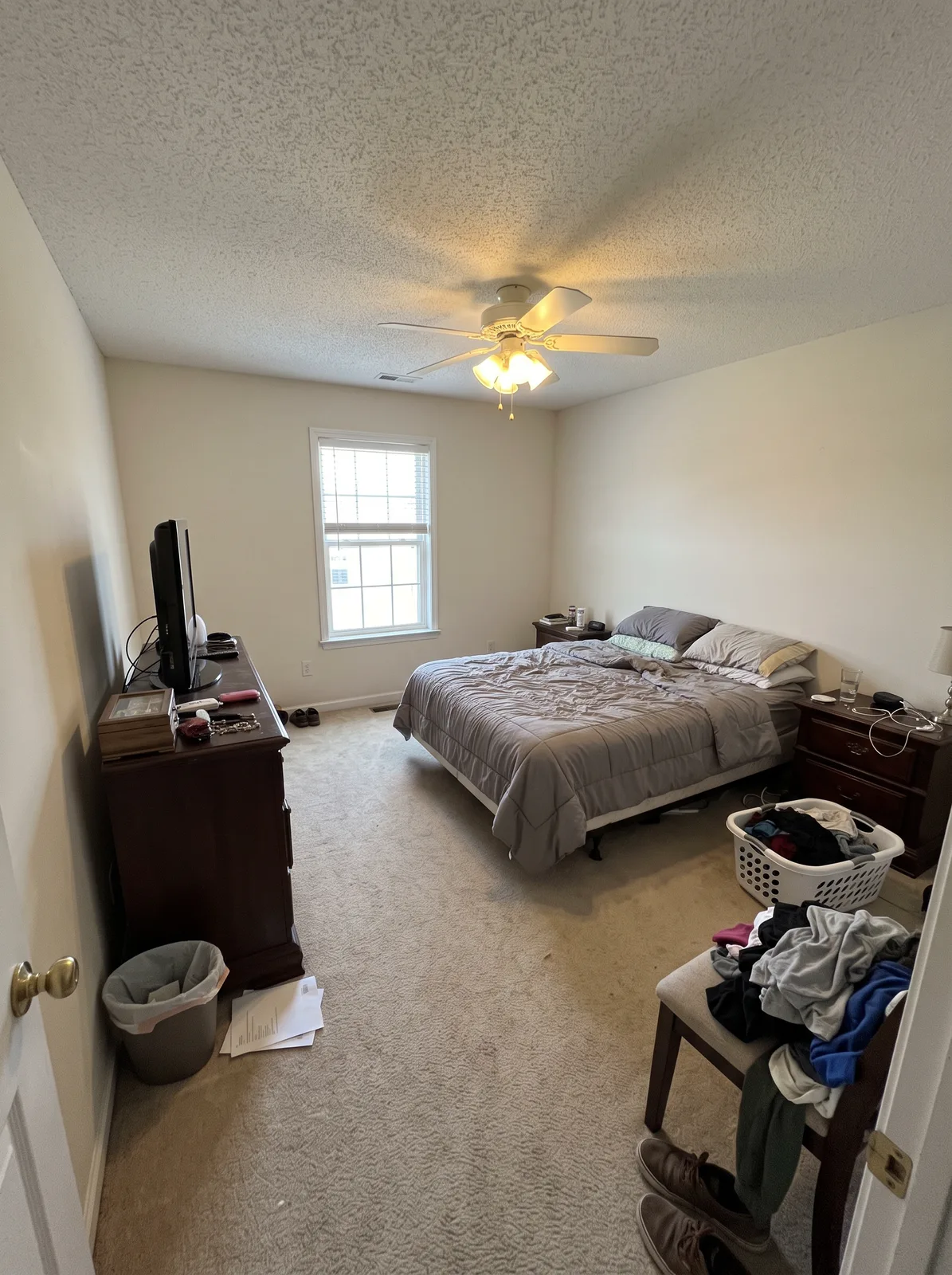 BeforeAfter
Questions about this approach
Is Japandi the same as minimalism?
They overlap in restraint, but Japandi often emphasizes natural texture and grounded forms. You can keep useful personal objects without making the room feel crowded.
Can I mix Scandinavian furniture with Japandi decor?
Yes. Repeat a few materials and colors, and compare proportions. A coherent palette matters more than matching every object to one label.
Which style is better for a small bedroom?
Either can work. Choose furniture by measured fit, storage access and comfort, then use the style as a direction for finishes and textiles.