Small Living Room Ideas You Can Try on Your Own Photo
Small living room ideas work best when they solve a specific daily annoyance: a chair blocking the hallway, nowhere to put a drink, or a sofa that overwhelms the window. Start with how you move through your room, then choose furniture and finishes. You can get a calmer, more useful space without making everything white or replacing every piece.
Before shopping, take a straight, well-lit photo from a corner. Use the tool below to compare visual concepts of your own room. Results vary by photo and may alter details; they do not replace measurements, contractors or a licensed designer.
By FreeAIRoomDesign · Published and updated 2026-10-21
Your room. A new perspective.
1 free image / daySmall living room ideas start with the walking route
Draw your room on paper and mark doors, door swings, windows, radiators and outlets. Trace the route you take from the entrance to the next room. If that line runs through the middle of the seating group, try shifting the sofa or replacing an occasional chair with a movable stool. Keep the route continuous rather than squeezing between several narrow gaps.
Tape proposed furniture outlines onto the floor. Walk through with a laundry basket, open nearby cabinets and sit down with someone else in the room. A layout that works only when the coffee table is pushed aside will be frustrating every day. Measure your actual habits as well as your walls.
Choose a sofa by depth, not just seat count
A sofa can fit along a wall and still be too deep for the room. Compare overall depth, arm width and usable seat width when you read product listings. Slim arms may give you similar sitting space in a shorter footprint. Raised legs reveal more floor, although closed bases can be useful if you dislike retrieving toys from underneath.
Do not automatically buy a sectional because the room has a corner. A sofa and a separate chair offer more ways to adjust the arrangement. Measure delivery access too: entry doors, hallway turns, stairs and elevator openings. Check whether legs detach and ask the retailer about its return policy before ordering.
Let the rug and tables organize the seats
Use a rug to connect the seating group instead of placing a tiny rug alone beneath the coffee table. Sketch several standard rug sizes against your sofa footprint, then use tape or a sheet to preview the edges. Make sure doors still open and the rug does not create a curled edge on your main route.
Round or oval tables can soften a tight turn, but inspect their widest point and base. Nesting tables let you bring a surface closer when needed and tuck it away later. If you use an ottoman as a table, try a stable tray and decide where it will go when you want to put your feet up.
Build light around what you actually do
One bright ceiling fixture often leaves a reading chair in shadow. Put a floor lamp beside the seat where you read and a smaller shaded lamp near the sofa. Check cord routes before choosing locations; a cable across a doorway is not a workable layout. Renters can compare plug-in lighting without planning electrical changes.
Keep the largest finishes visually connected. For example, repeat a warm neutral in the rug and curtains, then add a deeper green or rust through a pillow or chair. Test fabric swatches beside your existing floor in daylight and after dark. A pale sofa is not automatically practical if your household needs washable covers or durable upholstery.
Give everyday clutter a real destination
List what lands in the room each evening: mail, chargers, blankets, games or pet supplies. Closed storage is useful for mixed small objects; open shelves work better when you can maintain a few deliberate groups. Choose a shallow cabinet if a deep media unit would steal space from the walking route. Measure baseboards and outlet positions so it can sit where you expect.
Keep one surface empty enough to use. A room can look spacious in a photograph while offering nowhere to set a mug. Before adding decorative objects, reserve usable spots beside the seats. Edit what is already there first, then buy storage sized for the remaining items rather than buying baskets without a purpose.
Compare a concept with the room you measured
Try one quiet direction and one warmer, more layered direction on the same photo. Look at furniture proportions, curtain height and the balance between open and closed storage. The AI-generated examples below are sample rooms, not proof that a particular sofa fits your home.
Make a short action list from the result: move an existing chair, test a larger rug outline, then compare two lamps. Keep the architecture in the original photo as your reference. If an image removes a radiator, widens a doorway or invents more floor space, discard that detail. A useful concept should help you decide what to test next, not become a shopping list you follow blindly.
Your next step
Before you buy
- Measure the furniture footprint, door openings and delivery route.
- Compare material samples in daylight and under your evening lights.
- Check the full price, care instructions and return terms.
AI-generated sample concepts
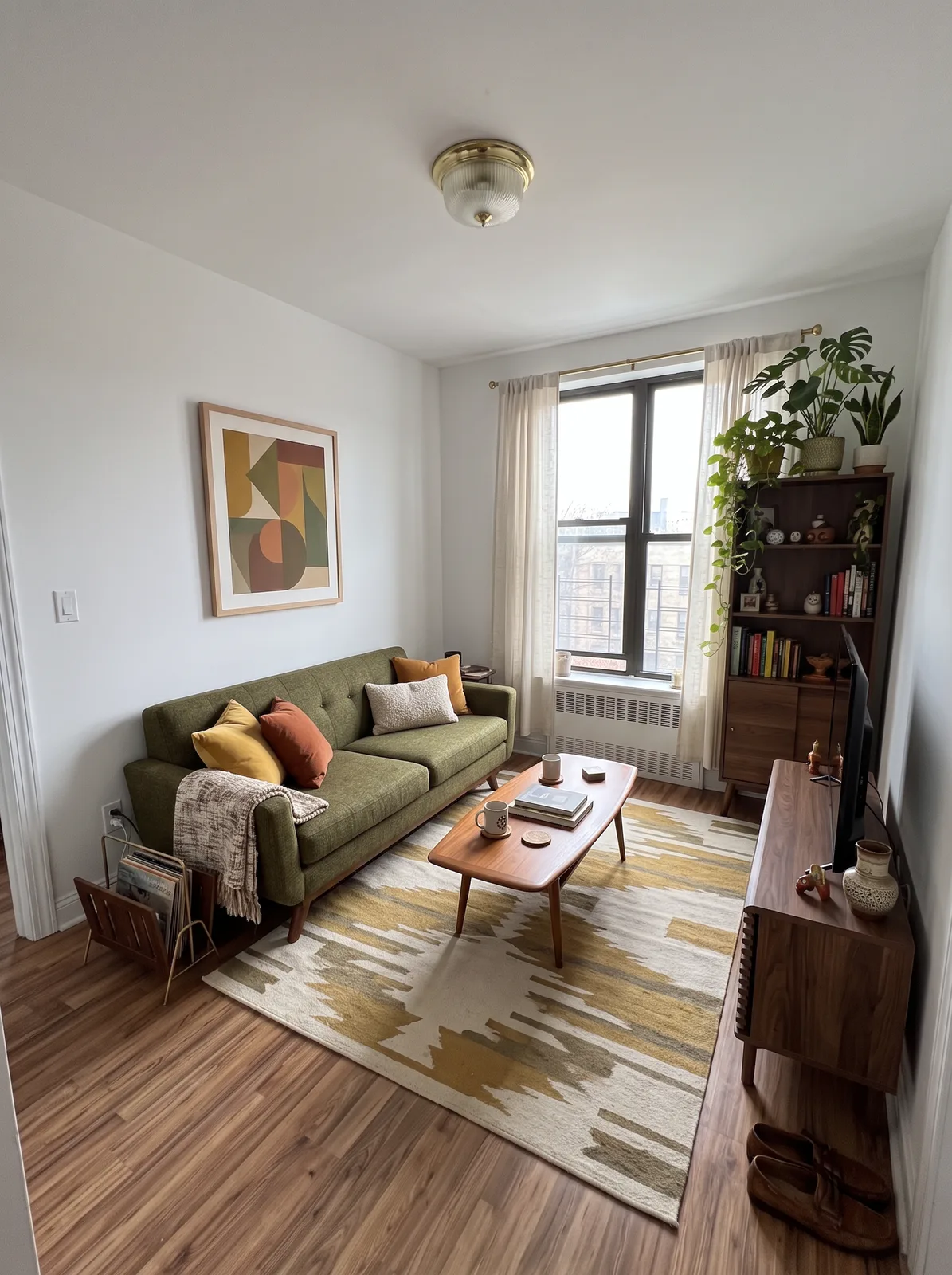
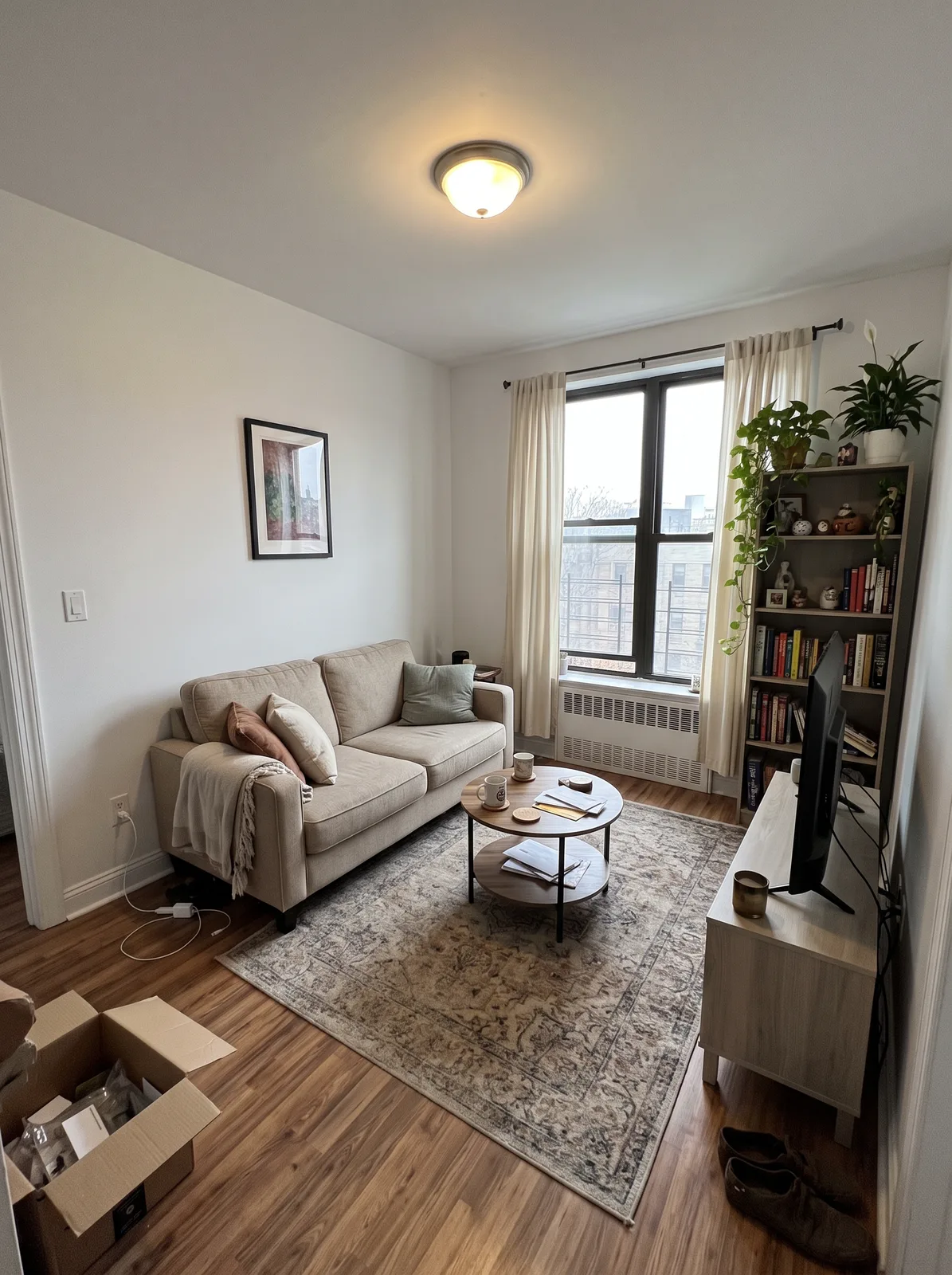 BeforeAfter
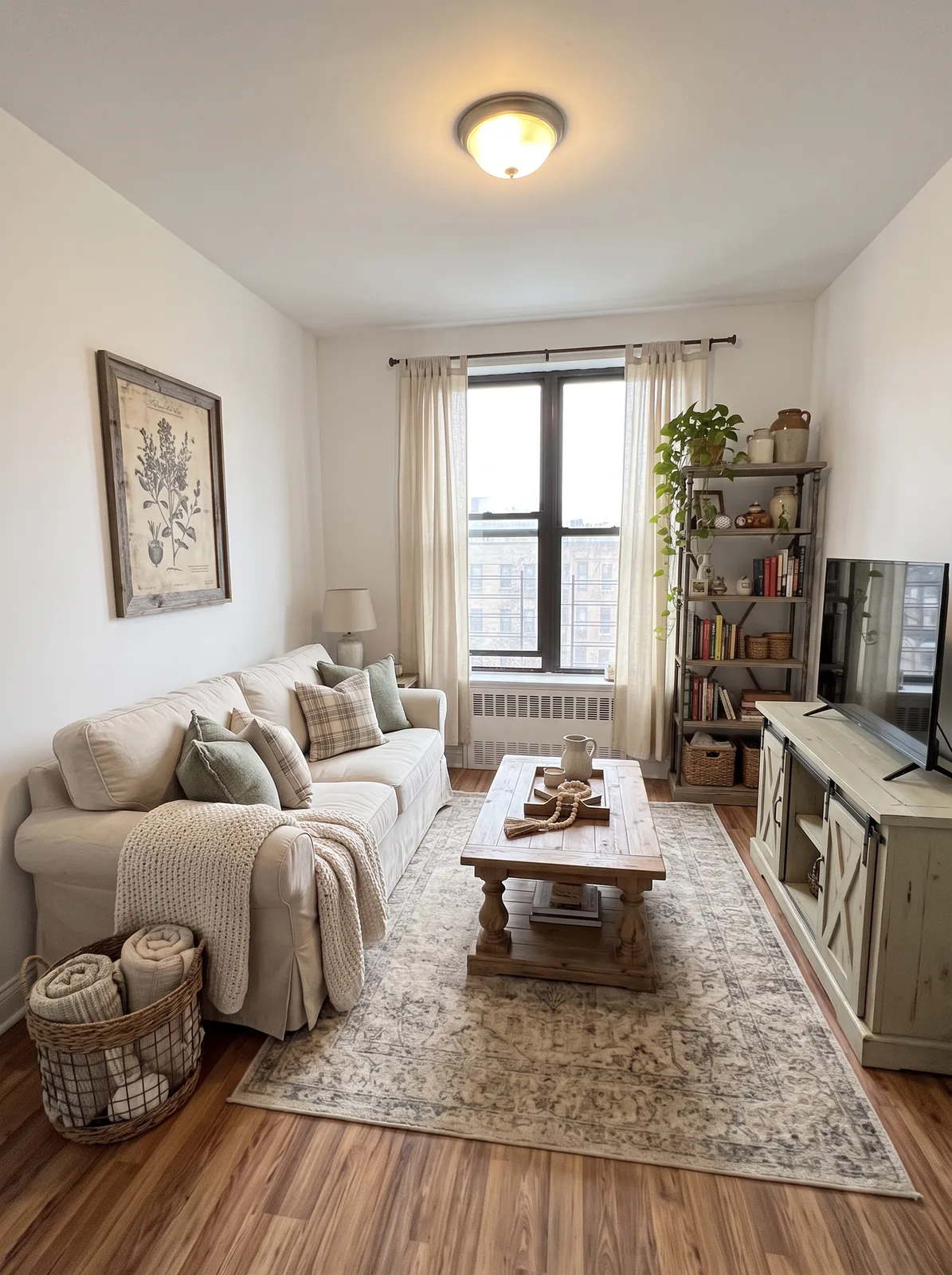 BeforeAfter
Questions about this approach
Should a small living room have a sectional?
Only if its depth and return leave your main route usable. Tape the full footprint on the floor and compare it with a sofa plus a movable chair.
Do all the walls need to be white?
No. Coordinate the large surfaces and test colors in your actual light. A warm neutral or deeper accent can work with the furniture you already own.
Will the AI show exact furniture sizes?
No. Treat the image as a concept and verify every item with a tape measure and the retailer’s dimensions.