Kitchen Refresh Ideas Without a Full Renovation
Kitchen refresh ideas without a full renovation begin with the parts that already work. If the cabinets are sound and the layout is usable, you may prefer a focused update to color, lighting, hardware and organization. The aim is a kitchen that is easier to use, not a cosmetic cover for leaks, damaged surfaces or unsafe equipment.
Upload a well-lit photo to explore concepts below. Results vary by photo and may suggest changes that are not feasible. The tool cannot inspect wiring, plumbing, cabinet condition or dimensions, and does not replace contractors or a licensed designer. Keep your actual layout and material requirements at the center of the plan.
By FreeAIRoomDesign · Published and updated 2026-10-21
Your room. A new perspective.
1 free image / dayKitchen refresh ideas without a full renovation: set boundaries
List what stays: cabinet boxes, countertops, appliances, sink location and flooring. Then separate decorating choices from work that requires inspection or a qualified installer. Replacing a movable runner is different from moving an outlet or disconnecting an appliance. If you rent, check written permissions before changing hardware or surface finishes.
Inspect the room before planning cosmetics. A swollen cabinet base or recurring moisture needs investigation rather than a fresh finish. Ask the appropriate professional about defects you cannot assess. Record the usable dimensions of counters, aisles and storage. A generated image that widens a narrow aisle should not become the basis for ordering a new island.
Edit the counters around real tasks
Clear one counter at a time and group items by how you use them: coffee, food preparation, washing and cooking. Keep frequently used equipment where it has a safe, practical home. Store occasional appliances if you can lift and retrieve them comfortably. An empty counter looks calm, but your kitchen still needs to support breakfast and dinner.
Measure cabinets before buying organizers. Note interior width, depth, hinges and plumbing that might obstruct a pullout. Use temporary containers to test a grouping first. Put labels where they make items easier to return, rather than adding a storage system that creates extra steps. Keep appliance ventilation and manufacturer clearances in mind when rearranging the work area.
Compare hardware before ordering a full set
Changing knobs or pulls can shift the look of existing cabinets without moving them. Measure the distance between screw holes, the screw length and clearance at corners. Order one sample and install it only if you have permission and it fits the existing fixing points. Check whether adjacent drawers or doors collide with the new projection.
Choose a finish that relates to something already present, such as lighting or an appliance detail. Exact matching is optional, but introduce differences deliberately. Save the old hardware, especially in a rental. If new pieces would require drilling, filling or refinishing, include that work in the decision instead of treating it as an automatic quick swap.
Use color without assuming every surface can be painted
Start with textiles, a suitable runner or a few everyday objects in a connected palette. Check that rugs are easy to clean, lie flat and stay clear of door swings. Compare colors beside your countertop and backsplash. A warm wood cabinet might look more intentional with quiet cream and muted green than with several unrelated bright accents.
If you are considering cabinet paint, identify the existing material and finish first. Preparation, compatible coatings, ventilation and cure time all matter. Get product-specific instructions or professional advice rather than following a generated image. Do not paint appliance surfaces, counters or food-contact areas with a product that has not been specified for that use.
Make existing light more useful
Notice where your body casts a shadow while preparing food. A ceiling fixture can light the room yet leave the worktop dim. Consider whether a permitted, suitable task-lighting product could help, following its installation instructions. Keep cables away from water and heat; electrical modifications belong with a qualified professional.
For a simpler comparison, look at compatible bulbs and existing fixture shades. Check ratings and dimmer compatibility before buying. View finish samples under the lights you actually use at night. A glossy backsplash and shiny hardware can create reflections that a soft rendering hides. Test real materials rather than assuming the atmosphere of the AI concept will transfer unchanged.
Make the concept a checklist, not a renovation promise
The example below is an AI-generated sample kitchen redesigned in a modern direction. It demonstrates a visual palette, not a verified low-cost project or a construction plan. When comparing your own image, ignore relocated windows, invented counter depth or altered appliance positions. Refer back to your original photo and dimensions.
Choose a sequence you can stop after each step: clear the counters, test one hardware sample, compare a textile, then investigate lighting. Get actual costs before committing to finishes or installation. Keep a record of product care requirements and return terms. A focused refresh is useful when the existing kitchen works; when the underlying problem is layout or condition, visual changes alone will not resolve it.
Your next step
Before you buy
- Measure the furniture footprint, door openings and delivery route.
- Compare material samples in daylight and under your evening lights.
- Check the full price, care instructions and return terms.
AI-generated sample concepts
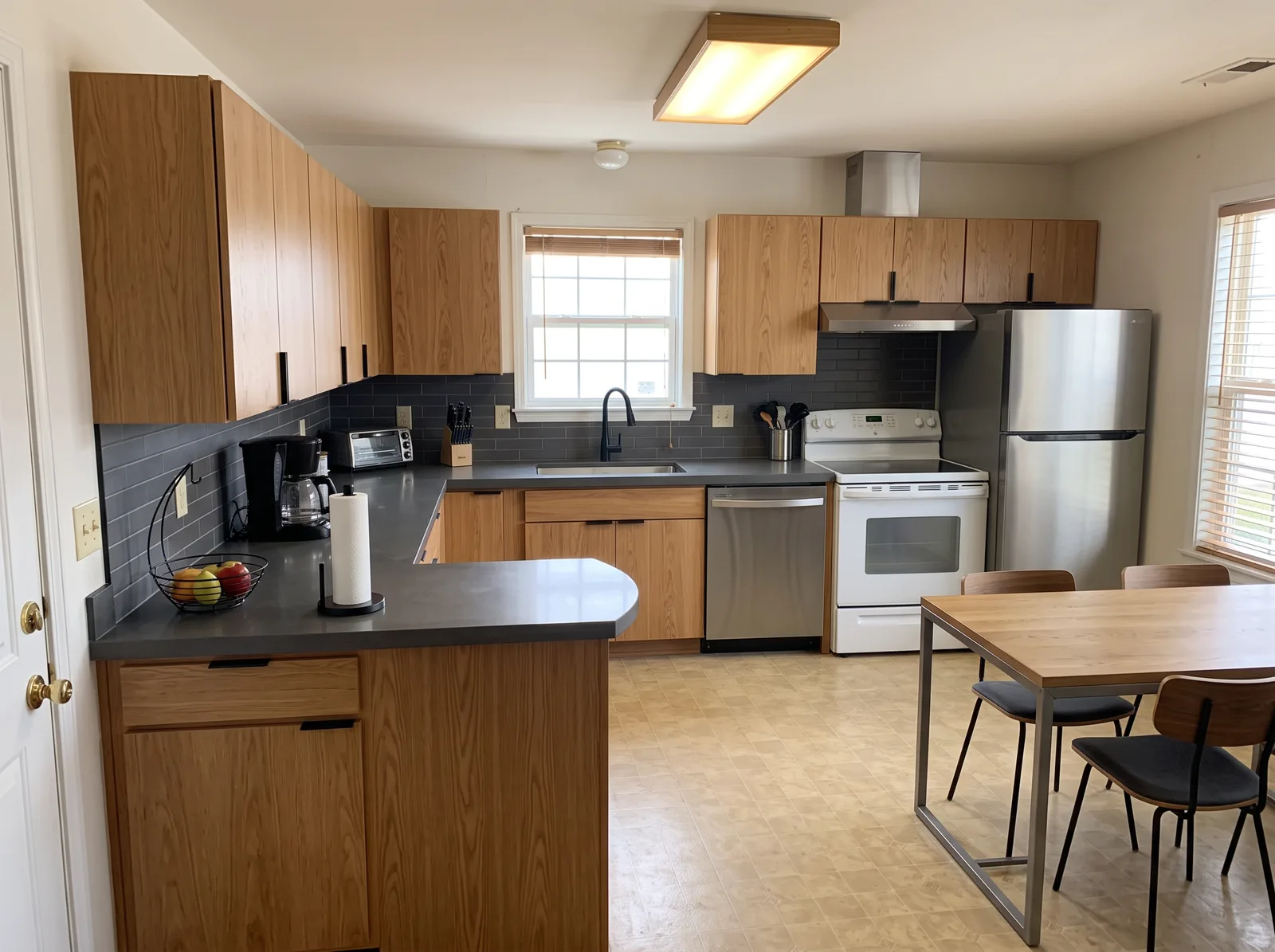
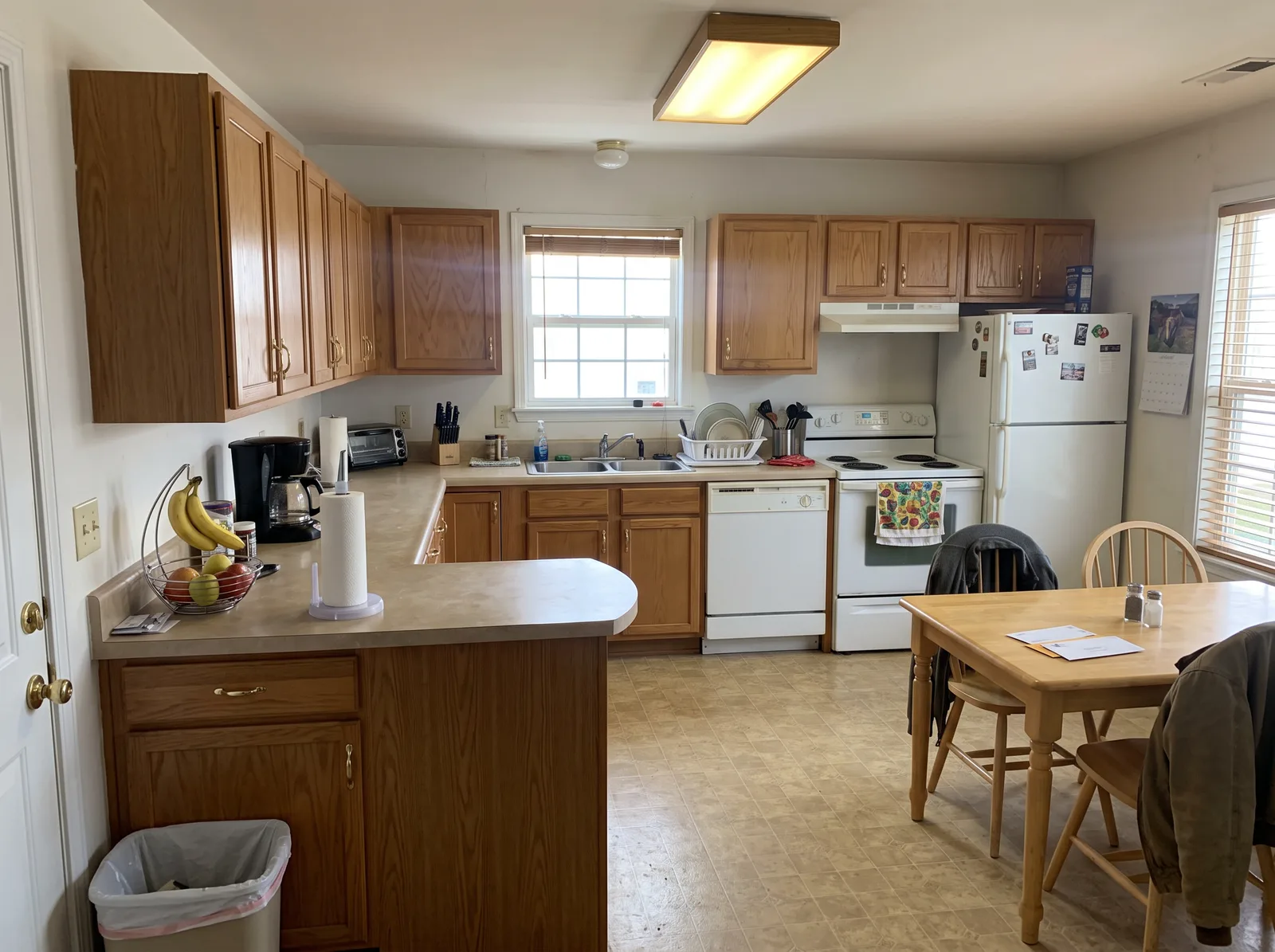 BeforeAfter
Questions about this approach
Can I refresh cabinets without replacing them?
Possibly, if they are sound. Hardware and organization may help. Finishing options depend on the existing material and require appropriate preparation and products.
Will AI keep my kitchen layout exactly?
The tool asks for the architecture to stay, but errors are possible. Compare each result with the original and reject invented space or relocated fixtures.
Is a kitchen concept a contractor-ready plan?
No. Verify dimensions, material suitability and installation requirements with qualified professionals before making physical changes.